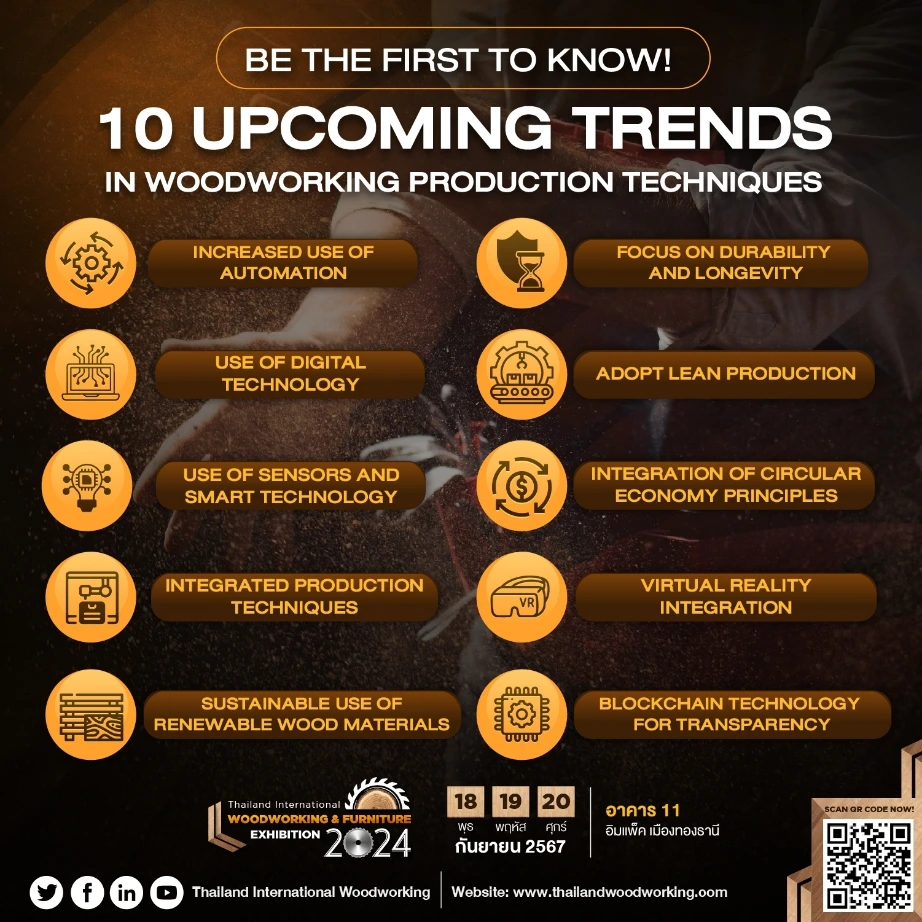
Today, Thailand International Woodworking and Furniture 2024 (TIWF 2024) has compiled a list of 10 key trends in woodworking production techniques that will drive the competitiveness of Thailand’s woodworking industry, and set the direction for its future development and growth.
Increased use of Automation: Assisting in the enhancement of the production process to be more efficient and cost-effective.
Digital Technology: 3D-printing and computer-aided design enabling more precise and complex designs.
Use of Sensors and Smart Technology: Allowing simultaneous monitoring and optimization of production processes.
Integrated Production Techniques: Merging of new and traditional woodworking techniques, resulting in unique and innovative designs.
Sustainable use of Renewable Wood Materials: Helping in reducing deforestation, such as the use of bamboo or processed recycled plastic timber, to ensure a more sustainable option.
More focus on Durability and Longevity: Designing wooden products to last longer and to reduce waste impacting the environment.
Adopting Lean Production Principles: Reducing waste, enhancing efficiency, and improving overall quality.
Integration of the Circular Economy Principles: Focusing on the use of recycled materials and a closed-loop production process to minimize waste and promote sustainability.
Virtual Reality Integration: Using of AR and VR technologies to provide visualization to customers and customize wood products in more immersive and interactive ways.
Blockchain Technology for supply chain transparency: Enhancing transparency and traceability in the wood supply chain, ensuring that wood products are ethically and sustainably sourced.
Source: Deskera