


Green Initiative: Reforesting for a Sustainable Thai Wood Industry
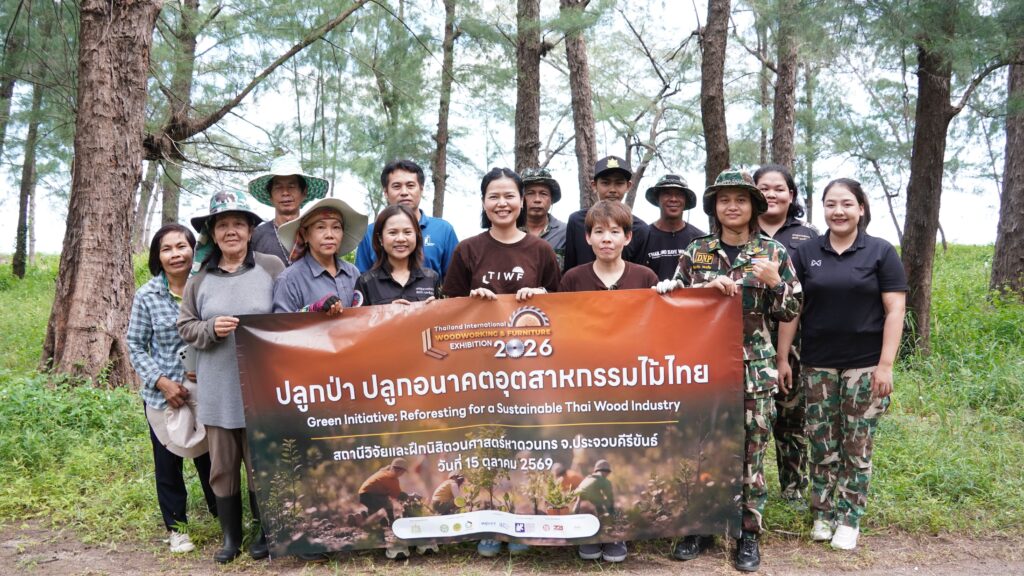
Sustainability in the woodworking and furniture manufacturing sectors does not begin or end on the exhibition floor; it is an ongoing responsibility that must advance alongside continuous natural resource restoration. Following the resounding success of the Thailand International Woodworking & Furniture Exhibition 2026 (TIWF 2026)—ASEAN’s premier trade exhibition for woodworking machinery and furniture manufacturing technology—the organizing committee carried forward its dedicated environmental program, initiated in 2024, to tangibly support ecological balance.
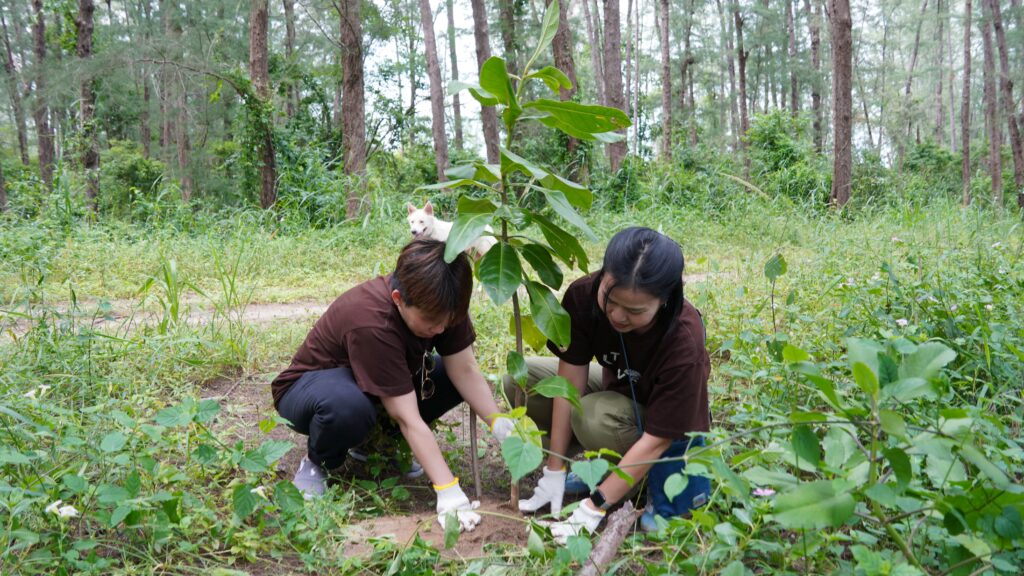
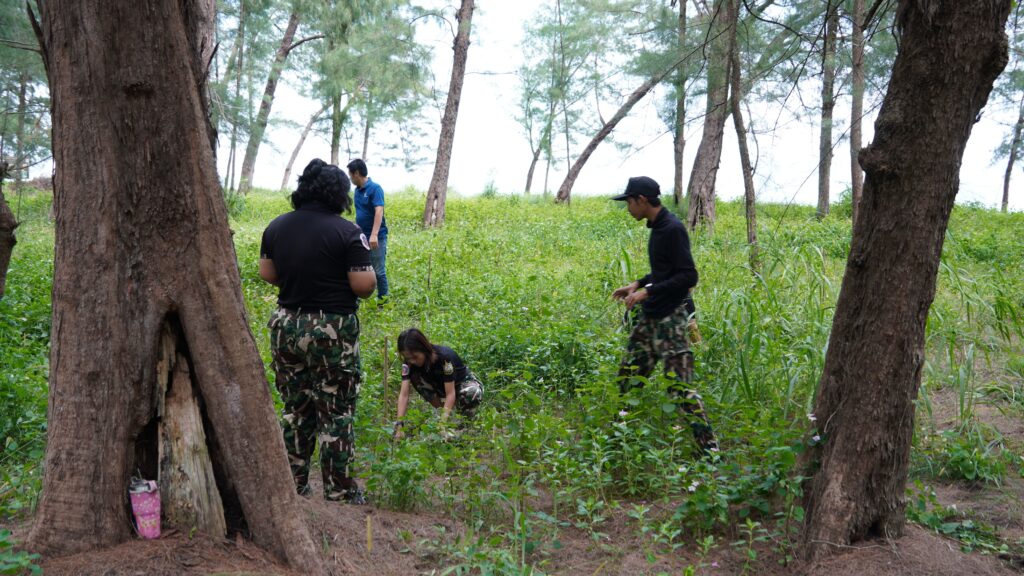
Collaborative Action for Coastal Forests
On 15 October 2026, the TIWF 2026 organizing team traveled to the Hat Wanakon Forestry Research and Student Training Station in Prachuap Khiri Khan Province. This initiative was made possible through close cooperation and generous support from the Royal Forest Department, one of the exhibition’s key strategic partners, which provided five hundred high-quality saplings for planting within the coastal conservation zone.
This reforestation effort prioritized native coastal species capable of thriving and adapting effectively to coastal forest conditions. Five hundred trees were evenly distributed across four distinct species—Casuarina (สนทะเล), Parkia (เหรียง), Padauk (ประดู่), and Rain Tree (จามจุรี)—to enhance local biodiversity, curb coastal soil erosion, and establish natural windbreaks along the shoreline.
Carbon Sequestration Potential Across Growth Stages
Beyond landscape restoration and coastal ecosystem enrichment, planting these four tree species plays a vital role in sequestering greenhouse gases. According to a preliminary technical assessment, this coastal forest reserve has the potential to absorb an average of approximately 4.6 metric tons of carbon dioxide equivalent (tCO2e) per year during its initial ten-year growth window.
Carbon sequestration rates are not static year over year; rather, they scale significantly alongside tree maturity, canopy expansion, and trunk volume. During the initial five years, average annual sequestration is estimated at around 1.2 tCO2e per year. This increases to an average of 4.6 tCO2e per year across the ten-year mark, with the potential to reach approximately 10 tCO2e per year once the trees reach mature growth at fifteen years. Fast-growing species such as Rain Tree and Casuarina account for a higher proportion of carbon capture in the earlier stages, while Padauk and Parkia provide enduring structural density and long-term carbon storage.
Data Transparency and Real-World Ecological Context
Genuine sustainability must be anchored in transparency and sound scientific methodology. The estimated carbon sequestration calculations are modeled upon a weighted average survival rate assumption of approximately 77.5 percent (benchmarked at 80 percent for Casuarina and Rain Tree, and 75 percent for Parkia and Padauk). Should real-world environmental factors cause actual survival rates to vary, total sequestration capacity will adjust accordingly.
Furthermore, coastal afforestation faces unique ecological challenges, including fast-draining sandy soil, strong seasonal wind shears, and airborne sea salt spray, which may result in slower wood biomass growth compared to conventional inland forestry. The figures presented serve as preliminary academic estimates and do not account for soil organic carbon storage or emissions generated during site preparation and ongoing maintenance. Transitioning these reforestation metrics into verified voluntary carbon credit frameworks—such as Thailand’s Voluntary Emission Reduction Program (T-VER)—would require empirical on-site biomass measurements and third-party verification by accredited independent auditors in accordance with international standards.
Advancing Toward a Sustainable Future Together
The tree planting initiative at Hat Wanakon not only embodies the organizing team’s dedication to mitigating environmental impact, but also reinforces the strong synergy between government agencies, academic forestry experts, and commercial enterprises. Together, we are committed to strengthening the entire value chain—from responsible forest stewardship to advanced processing and life-cycle-conscious architectural design.
Join us again as we return bigger and better at the Thailand International Woodworking & Furniture Exhibition 2028 (TIWF 2028), scheduled for 25–27 October 2028 at Halls 5–6, IMPACT Exhibition and Convention Centre, Bangkok, Thailand.


